Looking for a Fitness Band or Health and Fitness Tracker That Does More?
Modern fitness bands and fitness trackers can do far more than count steps. The most useful models combine workouts, daily activity, sleep, recovery, heart-rate data and longer-term trends — making them useful for several different goals instead of just one.
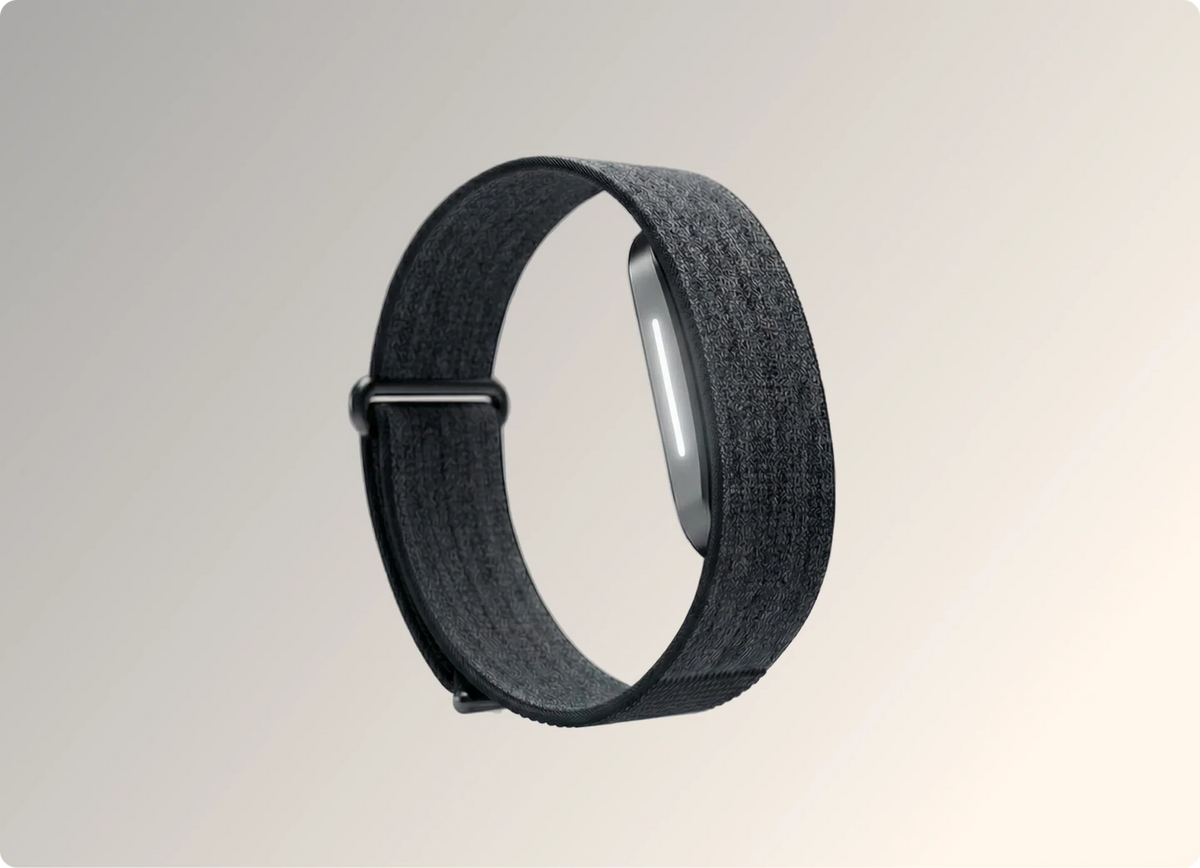
A screenless fitness band is designed to keep the focus on continuous tracking rather than notifications.
What Are You Looking for in a Fitness Band or Fitness Tracker?
People search for a fitness band or fitness tracker for very different reasons. Some want better workout tracking. Others care more about sleep, recovery, heart-rate trends or simply having a wearable they can keep on all day without another screen competing for attention.
That is why the strongest option is not necessarily the device with the longest feature list. It is the one that covers the main areas you actually want to follow in everyday life.
For Workouts
Track movement, heart rate, activity levels and strain to add more context around training days and overall activity.
For Sleep
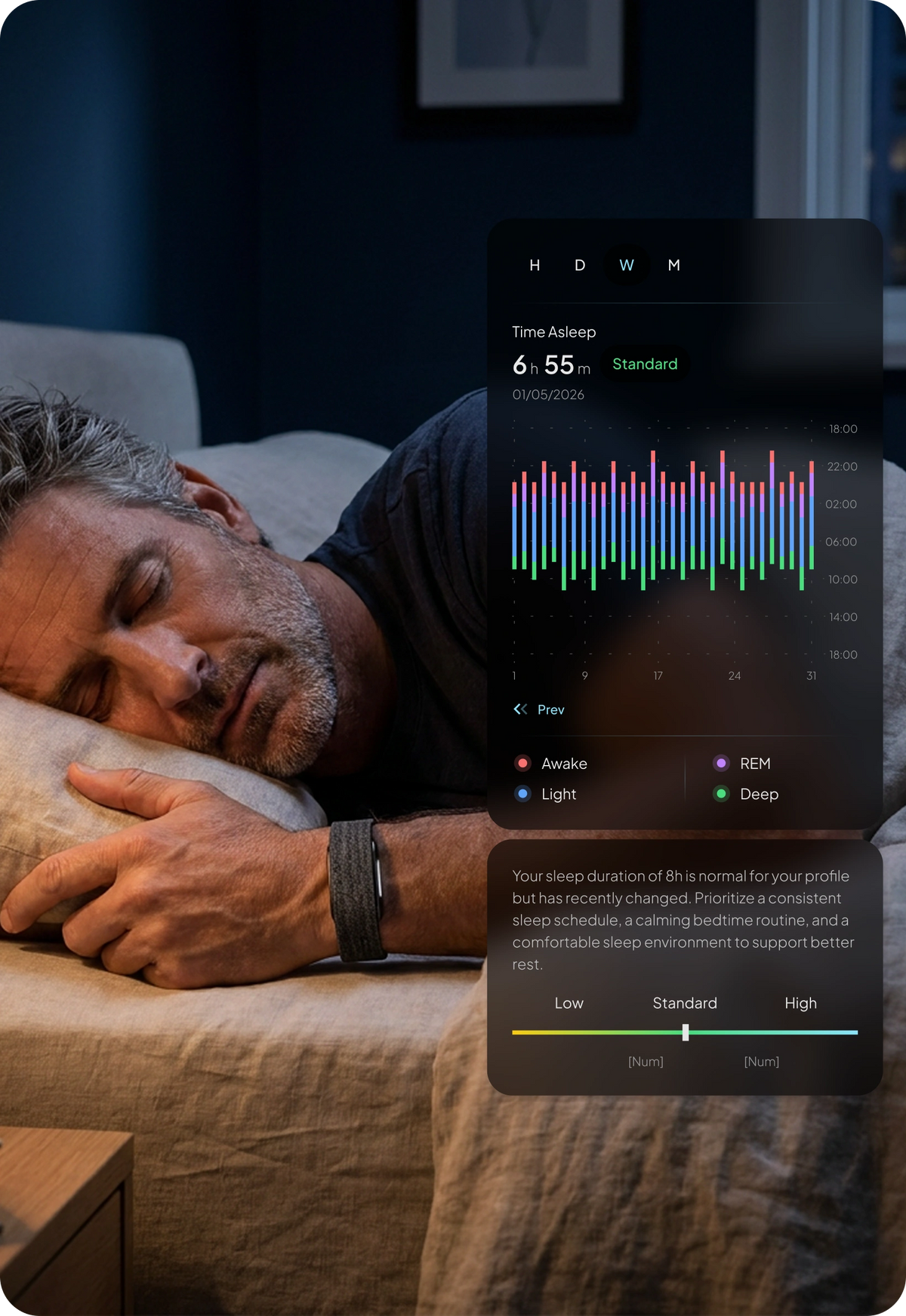
Follow sleep duration and sleep stages so you can compare nighttime patterns with how you feel and perform during the day.
For Recovery
Use HRV, sleep, resting heart-rate trends and strain information to get a broader picture of recovery between harder and lighter days.
For Everyday Health Tracking
Continuous monitoring can bring activity, heart rate, sleep, blood oxygen and other wellness signals together in one place.
For Simplicity
A screenless fitness band can stay focused on tracking while the companion app handles the charts, scores and trends.
For Long-Term Use
Battery life, comfort and subscription requirements matter when you plan to wear a tracker consistently over weeks and months.
Fitness Band or Fitness Tracker: What Should You Look For?
A good fitness band or health and fitness tracker should make everyday data easier to understand, not simply create another stream of numbers. For most people, the useful question is not “How many features does it have?” but rather “Does it track the signals that matter to my routine?”
If your goal is to understand workouts, sleep quality, recovery and everyday activity in one place, it makes sense to look beyond simple step counters and focus on a smart fitness tracker or smart fitness band that can capture data continuously throughout the day and night.
Daily Activity
Steps, movement, active time, calories and workout strain can provide context around how active you really are across the week.
Sleep
Sleep duration and sleep stages can help you see whether your nighttime routine is supporting your training and daily energy.
HRV & Heart Rate
Heart rate and heart-rate variability can add useful context to fitness, rest and recovery trends when viewed over time.
Recovery
Recovery-oriented trackers bring several signals together so you can compare harder days with lighter days and rest.
More Than a Step Counter
A modern smart fitness tracker can combine several measurements to give a broader picture of activity and recovery.
Heart Rate
Continuous heart-rate monitoring can help put workouts and daily activity into context.
HRV
Heart-rate variability is commonly used by recovery-focused wearables as one of several trend signals.
Sleep Stages
Tracking light, deep, REM and awake periods gives more context than total sleep time alone.
Activity & Strain
Movement, active minutes and strain can help connect training load with rest and recovery.

Hume Band 2.0
One option that fits several of these needs particularly well is Hume Band 2.0, a screenless wearable designed for continuous health and fitness tracking across workouts, sleep, recovery and everyday activity.
- Continuous heart-rate monitoring
- Heart-rate variability (HRV)
- Sleep stages and sleep quality
- Activity, strain and recovery tracking
- Blood oxygen and skin-temperature tracking
- Up to 14 days of battery life
- Core metrics available without a required subscription
Instead of putting another screen on your wrist, the Band sends its data to the Hume Health app, where you can review daily metrics and longer-term trends.
Why It Fits More Than One Type of Search
Hume Band 2.0 is not limited to a single use case. Its feature set overlaps with several common reasons people search for a fitness tracker:
- Fitness tracker for workouts: activity, heart rate and strain
- Fitness band for sleep: sleep stages and sleep quality
- Recovery tracker: HRV, sleep and recovery information
- Health tracker: continuous wellness metrics and trends
- Screenless fitness band: data in the app instead of another wrist display
- Fitness tracker without a required subscription: core data available through the free app
Why Recovery Matters as Much as the Workout
Exercise is only one part of the picture. If a tracker stays on your wrist throughout the day and night, it can also capture signals that help show how your body responds between workouts.
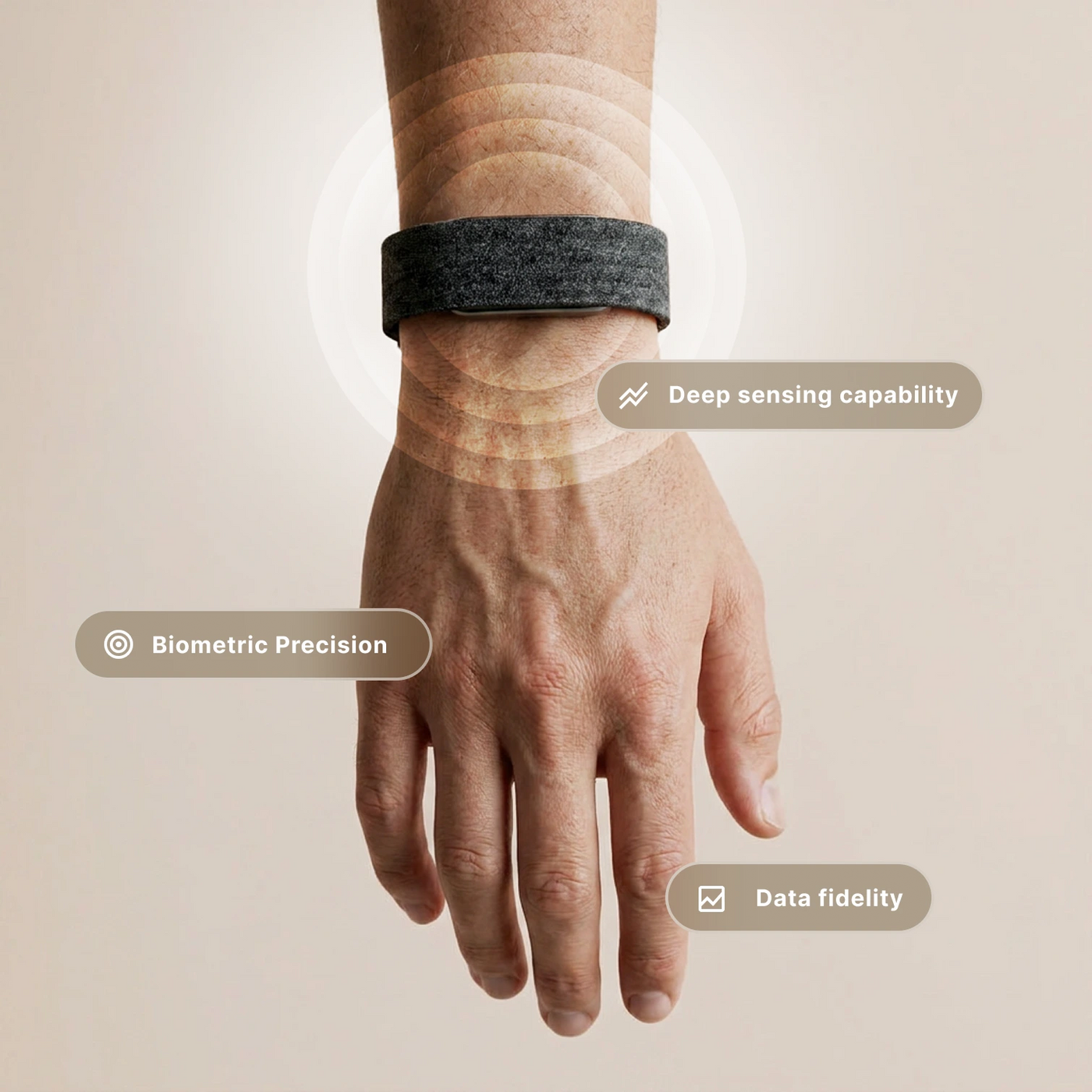
Hume Band 2.0 automatically tracks metrics including HRV, sleep stages, recovery, blood oxygen, skin temperature, activity and strain. This makes it more suitable for someone looking for a combined sleep and fitness tracker rather than a basic workout counter.
The companion app is where the data becomes easier to review, including daily scores and longer-term trends.
Do You Need Another Screen on Your Wrist?
Traditional smartwatches are built around a display. A screenless fitness tracker takes a different approach: it focuses on collecting data in the background while the phone app handles charts and insights.
That can make sense for people who want health and fitness tracking without adding more notifications, apps or on-wrist distractions.
Potential advantages
- Less distraction during the day
- Designed for continuous wear
- Focus on health and fitness data
- Longer battery potential than many full smartwatches
What to consider
- You view most information in the phone app
- No traditional smartwatch display
- Not intended to replace a phone or full smartwatch experience
- Advanced coaching features may require an optional membership
7 Things to Look For in a Fitness Tracker or Fitness Band
- Workout and activity tracking: Does it capture the kind of movement and training information you care about?
- Sleep tracking: Can it follow sleep duration and sleep stages instead of only daytime activity?
- Heart rate and HRV: Are these metrics available for longer-term fitness and recovery context?
- Recovery information: Does the device help connect sleep, strain and readiness-related trends?
- Comfort for 24/7 wear: A tracker is most useful when you actually want to keep wearing it.
- Battery life: Longer battery can reduce gaps in workout and overnight tracking.
- Subscription requirements: Check which metrics are included and which features require an ongoing membership.
Does a Smart Fitness Tracker Need a Monthly Subscription?
Not necessarily. Subscription requirements vary widely between wearable brands, and this is worth checking before buying because the ongoing cost can be more important than the initial purchase price.
For Hume Band 2.0, the Hume Health app is available for core metrics and raw data without a required subscription. Hume also offers an optional Premium membership for additional AI-driven coaching and deeper analysis.
| What to compare | Why it matters | Hume Band 2.0 |
|---|---|---|
| Core tracking | Determines what you can use without extra services | Core metrics and raw data included |
| Premium features | Some users want deeper coaching or analysis | Optional Premium upgrade |
| Battery life | Longer battery can reduce gaps in sleep and activity data | Up to 14 days |
| Water resistance | Important for workouts and everyday wear | IP68; Hume states up to 1 m for up to 2 hours |
Who Is This Type of Fitness Tracker For?
A screenless tracker like Hume Band 2.0 may be worth considering if your priority is continuous tracking rather than smartwatch features.
- You want activity and health trends in one app
- You care about sleep as well as workouts
- You want HRV and recovery information
- You prefer a screenless band
- You value longer battery life
- You want core tracking without a mandatory subscription
Health & Fitness Tracker FAQ
Is a fitness band the same as a fitness tracker?
The terms often overlap. “Fitness band” usually describes the physical wrist-band format, while “fitness tracker” describes the function. Many devices fit both descriptions.
Is a fitness tracker the same as a smartwatch?
Not exactly. Smartwatches usually prioritize displays, apps and notifications, while fitness trackers generally focus more heavily on activity and wellness data. Some trackers are screenless by design.
What should I look for when buying a fitness band?
Useful factors include activity tracking, sleep, heart rate, HRV, recovery information, battery life, comfort, app quality and whether core features require an ongoing subscription.
Can I wear a fitness band all day and while sleeping?
Many modern trackers are designed for continuous wear. Comfort, battery life and water resistance are important if you want consistent daytime and overnight data.
Do fitness trackers work without a screen?
Yes. Screenless trackers collect data on the wearable and display detailed metrics inside a companion phone app. This approach can reduce on-wrist distractions.
Is a screenless fitness tracker better?
It depends on what you want. A screenless band can be a good fit if you care more about continuous tracking and fewer distractions than notifications or apps on your wrist.
Are fitness trackers accurate?
Accuracy varies by device, sensor, metric and wearing conditions. Wearable metrics are generally best used to follow personal trends over time rather than as a substitute for medical-grade measurements.
What is a health and fitness tracker?
It is a wearable designed to collect fitness and wellness data such as activity, heart rate, sleep and related trends. More advanced models may also include HRV, recovery, blood oxygen and skin-temperature information.
What is the difference between a smart fitness tracker and a smartwatch?
A smartwatch generally centers on a display, notifications and apps. A fitness tracker is more focused on collecting activity and wellness data. Some models, including Hume Band 2.0, use a screenless design and place the detailed information in a companion app.
Can a fitness tracker monitor sleep and recovery?
Yes, depending on the model. Hume Band 2.0 tracks sleep stages, HRV, heart rate, strain and recovery-related information, which can provide context around training and rest.
Does Hume Band 2.0 require a subscription?
No subscription is required to use the Band or access its core raw data. Hume offers an optional Premium membership for additional AI-driven coaching and analysis.
How long does Hume Band 2.0 last on a charge?
Hume states that the Band can last up to 14 days on a single charge. Actual battery life can vary depending on use.
Is Hume Band 2.0 waterproof?
Hume lists the Band as IP68 rated, with water resistance up to 1 meter (about 3.2 feet) for up to 2 hours. Follow the manufacturer’s current care guidance for water exposure.
Want to See the Featured Smart Fitness Tracker?
Review the current Hume Band 2.0 specifications, app features, availability and pricing directly on the product page.
View Hume Band 2.0